
Teeth whitening simulation: set the expectation first
Why a whitening preview helps patients choose a realistic brightness level, how shade-drift conversations work…
Read the guideUse case
How alignment simulations support orthodontic consults, what to show aligner-curious adult patients, and where outcome previews fit into case acceptance.
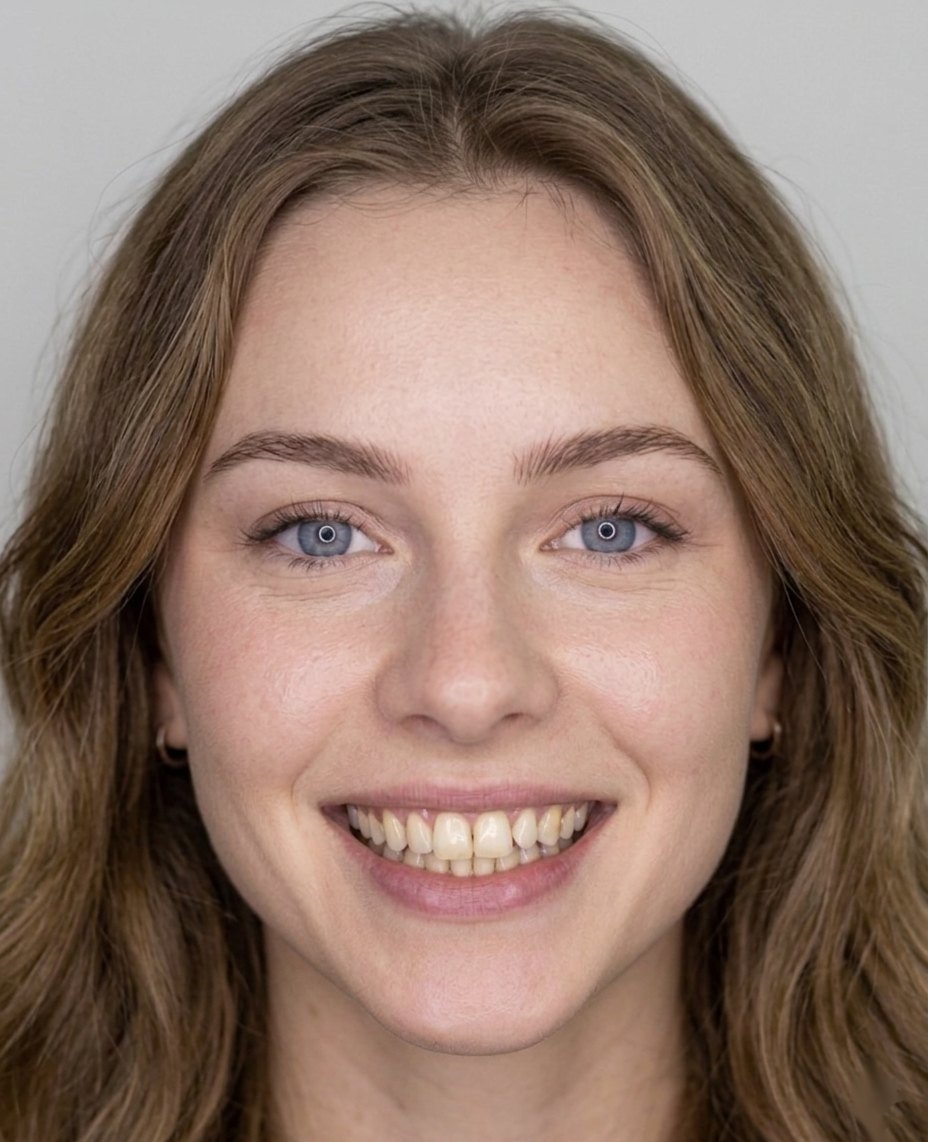
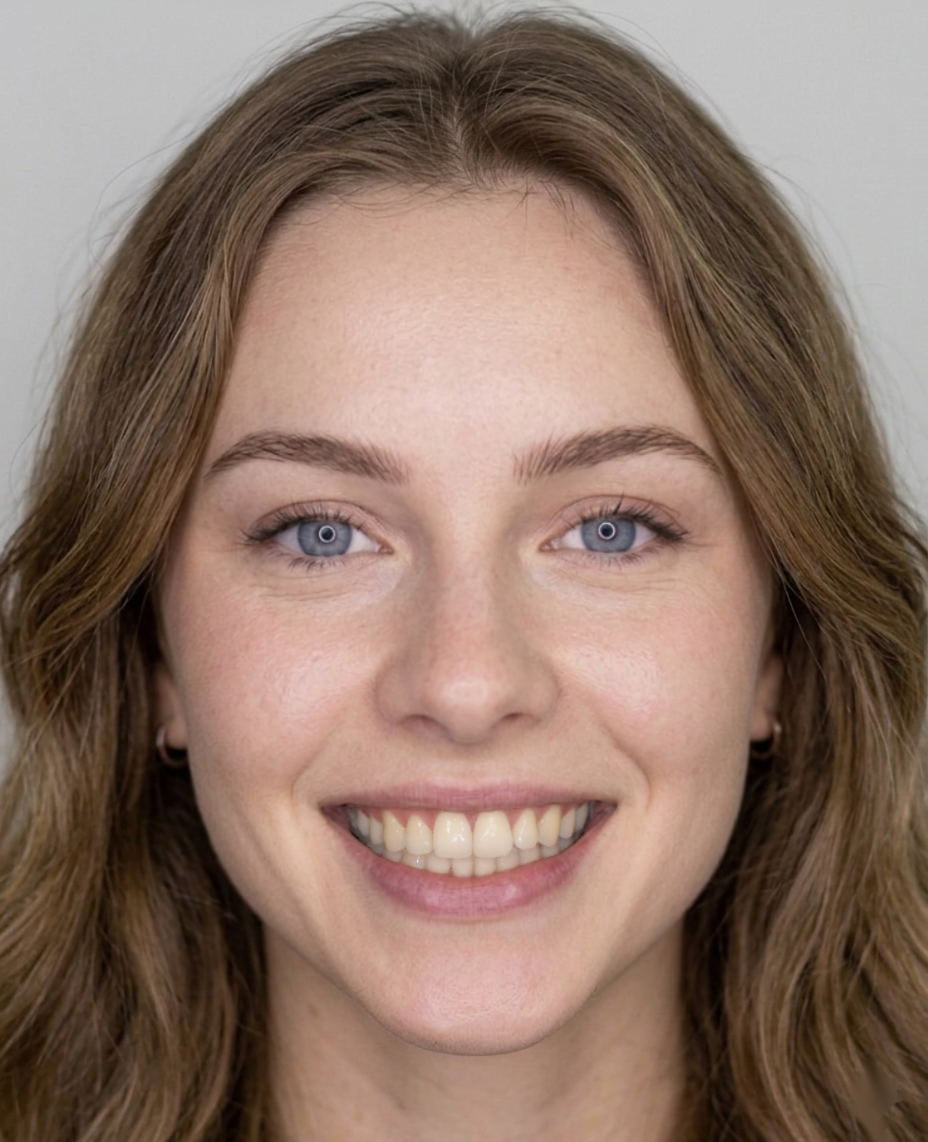
Step 1
A frontal smile that shows the crowding or spacing you would move.
Step 2
The simulation shows the destination on this face. Tray sequence and mechanics stay your plan.
Step 3
Patient and clinician look at the same outcome while treatment is planned.
An alignment preview is a simulated image of a patient’s own face with a corrected arch, shown during an orthodontic consult. It shows the destination of the treatment, not the path to it.
The hardest part of an orthodontic consult is not the biology: it is asking a patient to commit to months of treatment for an outcome they must imagine. An alignment preview is not a treatment plan, and it is not a stock “after” photo of someone else.
The alignment operation renders the simulated outcome of straightening on the patient’s photograph. It is a communication visual, not a treatment plan: it shows the destination of a corrected arch form, while your records, scanning and biomechanics define the actual path. Saying this out loud protects trust — patients respect “this is the goal; here is how we get there” far more than an implied guarantee.
Adults hesitate less about cost than about visibility and time. The preview answers with specifics: this is your smile at the end, here is the simulated change in the mirror zone, and the treatment that gets there is the one you choose. When a patient asks about clear aligners versus braces, the outcome picture stays the same — the conversation moves to the mechanics, which is where your expertise lives.
Long treatment means motivation fades. Practices that re-show the approved preview at progress visits give patients a reason to persist through the uncomfortable middle: the endpoint is not an abstract promise, it is the picture they picked. A video generated from the completed still also makes a compelling milestone record when the case finishes.
A straighter arch on this photo. Tray sequence and mechanics stay the clinician's plan.
No. It is a communication preview of the aesthetic goal; your biology, the preparation and the lab's work determine the final outcome.
Why a whitening preview helps patients choose a realistic brightness level, how shade-drift conversations work…
Read the guideHow veneer preview simulations work, what a good before/after mock-up shows a patient, and where photorealisti…
Read the guideOperations, pricing and the data-handling posture, on one page.
Visit the homepageStart free in the web app, or book a demo to see the consult flow end to end.